

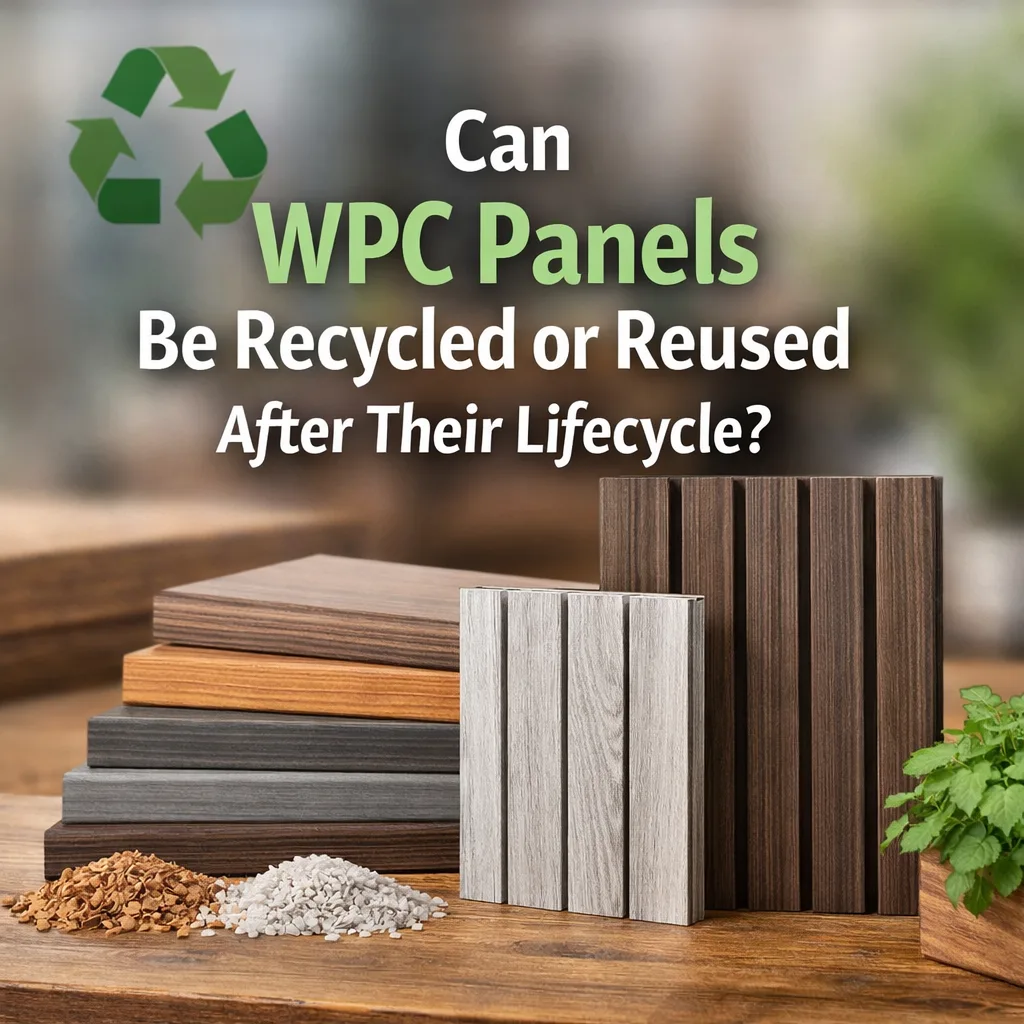
As sustainability becomes a priority in modern construction and interior design, homeowners and builders are actively seeking materials that are durable, stylish, and environmentally responsible. One such material gaining popularity is WPC panels (Wood Plastic Composite panels). While WPC panels are well-known for their strength and low maintenance, a common question remains: Can WPC panels be recycled or reused after their lifecycle?
This blog explores the recyclability, reusability, and environmental impact of WPC panels, helping you make an informed and eco-friendly choice.
Understanding the Lifecycle of WPC Panels
WPC panels are manufactured using a blend of wood fibers, thermoplastics, and additives. This combination results in panels that offer the natural appearance of wood with the durability of plastic. Their lifecycle typically includes:
- Manufacturing
- Installation
- Long-term usage (often 15–25 years)
- End-of-life handling (reuse or recycling)
Due to their long lifespan, WPC panels reduce the need for frequent replacements, already making them a sustainable wall solution.
Can WPC Panels Be Recycled?
Yes, WPC Panels Are Recyclable
One of the biggest environmental advantages of WPC panels is that they can be recycled. Since they are made from thermoplastics, WPC panels can be reprocessed and remolded into new products.
How WPC Panel Recycling Works
- Old or damaged panels are collected
- Panels are shredded into smaller particles
- The material is cleaned and melted
- The recycled compound is reused to manufacture new WPC products
Recycled WPC material is often used to produce:
- New wall panels
- Decking boards
- Outdoor furniture
- Fencing and cladding systems
This recycling process significantly reduces landfill waste and conserves raw materials.
Can WPC Panels Be Reused Instead of Recycled?
Yes, WPC Panels Are Highly Reusable
In many cases, WPC panels do not need immediate recycling. If removed carefully, they can be reused in other applications.
Common Reuse Applications
- Accent walls in different rooms
- Office partitions
- Temporary structures
- Retail interiors
- Outdoor sheds or utility areas
Because WPC panels resist moisture, termites, and warping, reused panels maintain their performance even after years of service.
Why WPC Panels Are an Eco-Friendly Choice
1. Made Using Recycled Materials
Many WPC panels are manufactured using recycled plastic and reclaimed wood fibers, reducing dependency on virgin resources.
2. Reduced Deforestation
By replacing natural wood, WPC panels help reduce the demand for timber, supporting forest conservation.
3. Lower Carbon Footprint
The long lifespan and recyclability of WPC panels contribute to lower overall carbon emissions compared to traditional materials.
4. Minimal Waste Generation
WPC panel waste can be reused during manufacturing, making production more efficient and sustainable.
Challenges in Recycling WPC Panels
While WPC panels are recyclable, there are a few limitations:
- Recycling facilities for WPC may not be available everywhere
- Mixed material composition requires specialized processing
- Improper disposal can reduce recycling potential
However, with increasing awareness and better recycling infrastructure, these challenges are gradually being addressed.
How to Extend the Life of WPC Panels
Extending the lifespan of WPC panels further improves sustainability. Here’s how:
- Clean regularly using mild soap and water
- Avoid harsh chemicals
- Protect from extreme heat exposure
- Ensure proper installation to prevent stress damage
Well-maintained WPC panels can last decades before needing replacement.
WPC Panels vs Traditional Materials in Sustainability
| Material | Recyclable | Reusable | Lifespan | Maintenance |
|---|---|---|---|---|
| WPC Panels | ✔ Yes | ✔ Yes | Long | Low |
| Natural Wood | Limited | Moderate | Medium | High |
| PVC Panels | Limited | Low | Medium | Low |
| MDF Panels | ❌ No | ❌ No | Short | High |
This comparison highlights why WPC panels are considered one of the most sustainable wall panel solutions available today.
Final Thoughts
So, can WPC panels be recycled or reused after their lifecycle? Absolutely. WPC panels offer both recyclability and reusability, making them an environmentally responsible choice for modern interiors and exteriors. Their long lifespan, low maintenance, and sustainable composition make them ideal for homeowners and builders who prioritize eco-friendly construction materials.
Choosing WPC panels not only enhances aesthetics and durability but also contributes positively to environmental conservation—making them a smart investment for the future.
Frequently Asked Questions
Yes — most WPC (Wood Plastic Composite) panels are made using thermoplastics and wood fibers, which means they can be mechanically recycled at the end of their lifecycle. The panels are shredded, cleaned, and then reprocessed into new composite materials used for panels, decking, fencing, or other products.
WPC panels can typically be recycled multiple times through mechanical recycling. While successive recycling may slightly impact properties if done repeatedly, innovations in processing help maintain strength and usability for new products.
Yes — before recycling, used WPC panels can be reused in other applications. If removed carefully and cleaned, they can be installed as accent walls, partitions, garden structures, or utility panels. This reuse extends their functional life before final recycling.
Recycled WPC materials can maintain a high percentage of their original strength when properly processed. Manufacturers often mix recycled material with fresh additives to restore performance for new applications.
Yes — WPC recycling requires proper sorting, cleaning, and facilities capable of mechanical reprocessing. In areas lacking such infrastructure, old WPC panels may still end up in landfills unless manufacturers or recyclers step in.
Coloria Group