


PVC wall panels have become a preferred solution for homeowners who want attractive interiors without the high maintenance of traditional wall finishes. Their waterproof nature, modern appearance, and simple installation make them suitable for bedrooms, living rooms, kitchens, offices, and commercial spaces. However, after installation, some people hear an occasional clicking or popping sound coming from the panels. Although this can seem worrying, it is usually a normal reaction of the material rather than a sign of failure.
Understanding the reason behind these sounds will help you determine whether they are expected or whether your installation requires attention.
Understanding How PVC Panels Behave
PVC is an engineered material designed to remain durable under different indoor conditions. Unlike natural materials, it reacts slightly when room temperatures increase or decrease. Even a small change in temperature can cause the material to move by a tiny amount.
Since PVC panels are joined together and fixed to walls or ceilings, this slight movement can sometimes create a clicking sound as the panels settle into their new position.
Most of the time, this movement is completely harmless and does not affect the lifespan of the installation.
Temperature Changes Can Trigger Small Movements
One of the most common reasons behind clicking sounds is the daily change in indoor temperature.
For example, a room may stay cool during the morning but become much warmer in the afternoon because of sunlight entering through windows. As evening arrives, temperatures begin to fall again.
During these changes, PVC panels expand slightly when warm and return to their original size as they cool. This natural movement may produce short clicking noises that last only a few seconds.
Homes with large glass windows, skylights, or west-facing walls often notice these sounds more frequently.
Panels Need Space to Move
Every quality PVC panel installation should include enough clearance around the edges.
If installers fit the panels too tightly against walls, ceilings, or decorative trims, the material has no room to adjust naturally. As pressure builds inside the panel system, it is released through small clicking sounds.
Leaving a small expansion space allows the panels to move freely without creating unnecessary stress.
Professional installers always consider this when fitting PVC wall panels.
Tight Fixing Can Restrict Natural Movement
Another possible reason is excessive tightening during installation.
Fasteners or fixing clips should hold the panels securely while still allowing a slight amount of movement. If screws are tightened too much, the panels cannot move naturally during expansion and contraction.
As temperatures change, the panel attempts to expand but cannot move smoothly. Instead, the stored pressure is released through clicking or popping sounds.
Using the recommended fixing method greatly reduces this possibility.
Uneven Installation Surfaces
The condition of the wall behind the panels also affects performance.
If the surface contains bumps, hollow areas, or uneven framing, certain sections of the panel may not sit evenly. As the material naturally adjusts to room conditions, these unsupported areas may flex slightly and produce occasional sounds.
Preparing the wall properly before installation helps prevent unnecessary movement.
A smooth and level surface provides better support for every panel.
Newly Installed Panels Need Time to Settle
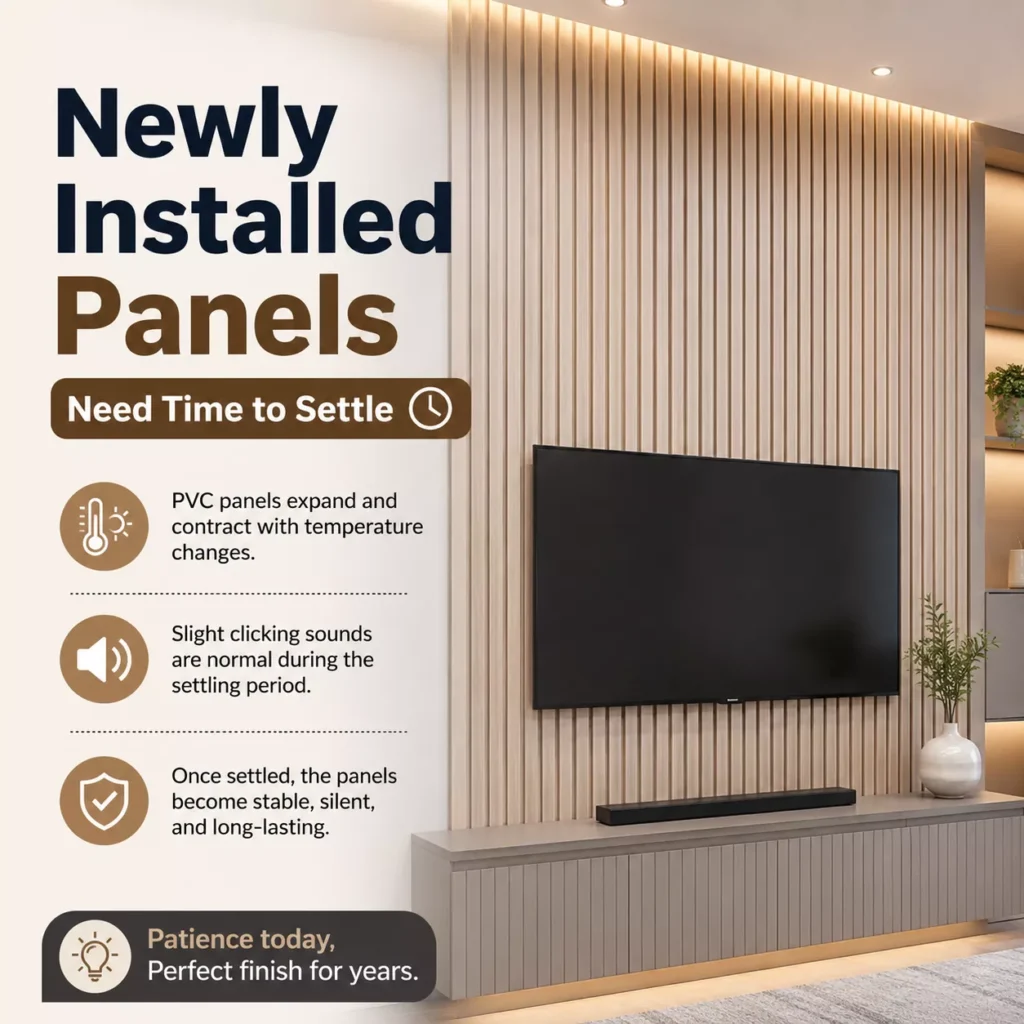
Many homeowners hear clicking sounds only during the first few weeks after installation.
This happens because the panels are adjusting to the indoor environment. During manufacturing, transportation, and storage, the material experiences different temperatures. Once installed inside your home, it gradually adapts to the room conditions.
As this settling process finishes, the sounds usually become less frequent.
This adjustment period is completely normal for many building materials.
Changes in Indoor Humidity
Although PVC itself does not absorb water like wood, humidity can still influence the supporting structure behind the panels.
If timber battens or wooden framing are used, they may expand slightly during humid weather and shrink again when conditions become dry.
This movement can gently affect the attached PVC panels and occasionally create clicking sounds.
Using properly seasoned framing materials minimizes this effect.
Direct Sunlight Can Increase Movement
Rooms that receive strong sunlight throughout the day often experience greater temperature variation.
A feature wall behind a large window may become much warmer than the rest of the room. As the panels heat up, they expand more noticeably.
When the room cools during the evening, the material contracts again.
This repeated cycle can produce small clicking sounds, especially during seasonal weather changes.
Installing curtains, blinds, or UV-protective glass can help maintain a more stable indoor temperature.
Simple Ways to Reduce Clicking Sounds
Although some movement is unavoidable, proper installation practices greatly reduce unwanted noise.
- Allow expansion gaps around the edges of the panels.
- Install PVC panels only on clean and level surfaces.
- Avoid over-tightening screws or fixing clips.
- Store the panels inside the installation area for at least 24 hours before fitting them.
- Use high-quality accessories recommended by the manufacturer.
- Maintain stable indoor temperatures whenever possible.
These simple precautions help the panels perform as intended for many years.
When Should You Inspect the Installation?
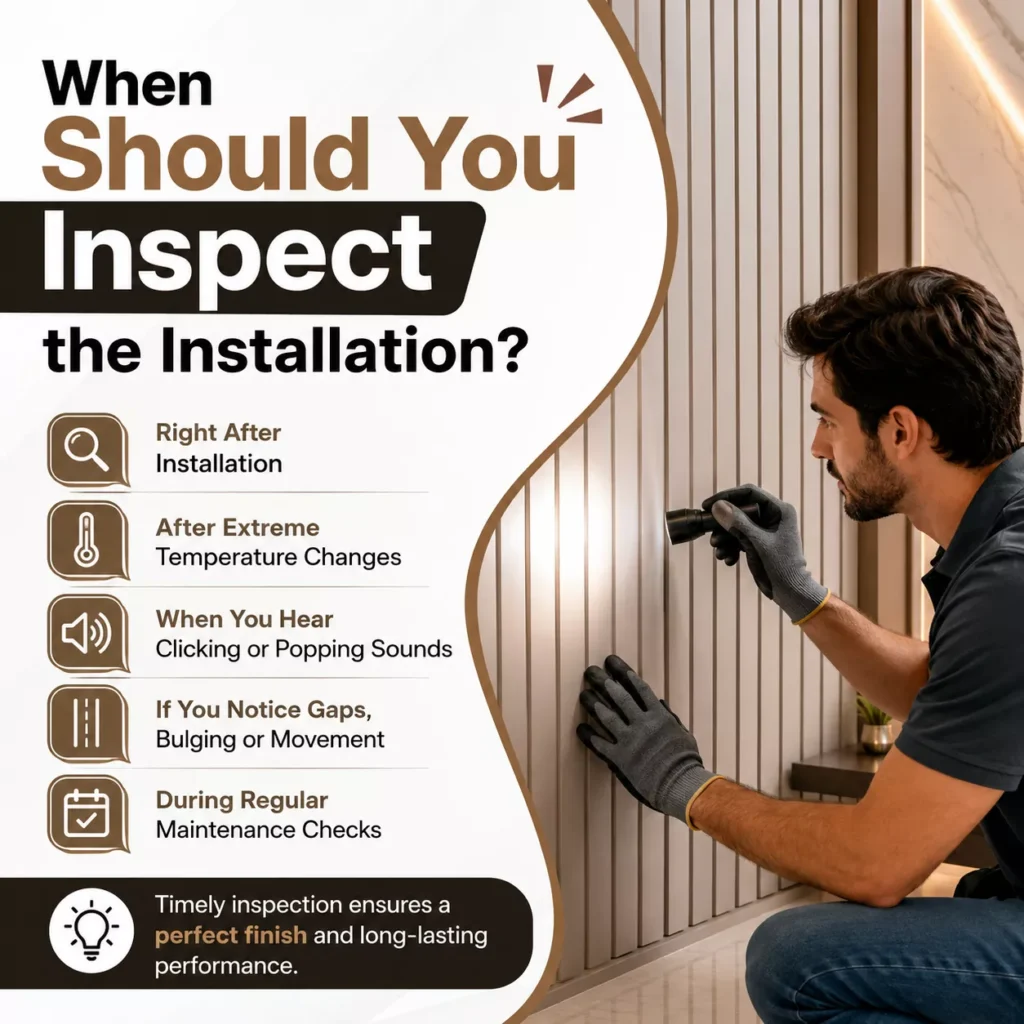
Occasional clicking sounds are generally considered normal. However, if the noises become frequent or are accompanied by visible damage, further inspection may be necessary.
Watch for signs such as:
- Panels lifting away from the wall
- Visible cracks or bending
- Gaps between adjoining panels
- Loose fixing clips
- Uneven wall surfaces
These symptoms may indicate an installation issue rather than normal material movement.
Why Proper Installation Matters
Correctly installed PVC panels provide long-term performance with very little maintenance.
They offer several advantages, including:
- Excellent moisture resistance
- Easy cleaning
- Attractive decorative finishes
- Lightweight construction
- Long service life
- Resistance to termites and everyday wear
When installation follows recommended guidelines, homeowners can enjoy these benefits without worrying about unnecessary maintenance.
Conclusion
If you notice PVC panels making clicking sound after installation, there is usually no reason to be concerned. In most cases, the sound is simply the material responding to natural temperature changes as it expands and contracts. This behaviour is common in many modern building materials and is not normally a sign of poor product quality.
Ensuring correct installation, leaving sufficient expansion space, preparing a smooth surface, and using the right fixing techniques all help minimise these sounds. With proper installation and routine care, PVC panels continue to provide a durable, stylish, and low-maintenance wall solution for both residential and commercial interiors.
Frequently Asked Questions
Clicking sounds are usually caused by thermal expansion and contraction, overly tight installation, improper adhesive application, or insufficient expansion gaps that restrict natural panel movement.
Ensure the panels have adequate expansion gaps, use the correct adhesive, avoid over-tightening fasteners, and install them on a clean, level surface.
Yes. Leaving small expansion gaps around the edges helps accommodate natural movement and reduces the risk of clicking, warping, or buckling.
Yes, if you carefully follow the manufacturer’s installation instructions, prepare the wall correctly, leave expansion gaps, and use the recommended adhesive.
Yes. PVC naturally expands in warm conditions and contracts when temperatures drop, which can produce clicking or popping sounds if the panels do not have room to move.
Store the panels in the installation room for at least 24 hours before fitting them, maintain stable indoor temperatures, and leave adequate expansion space around the edges.