

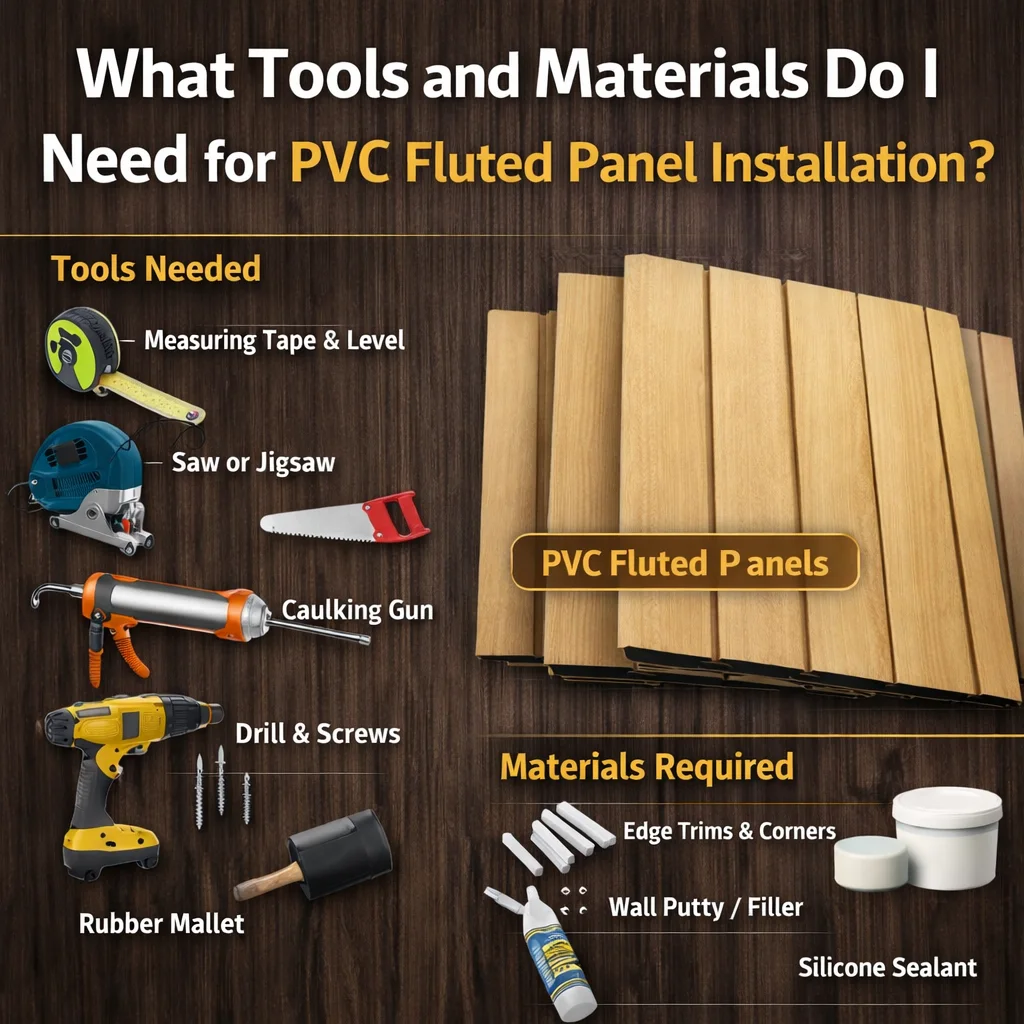
Installing PVC fluted panels is a modern and efficient way to upgrade interiors with a stylish, textured finish. Whether you’re enhancing a living room feature wall, office space, or commercial area, having the right PVC fluted panel installation tools and materials ensures a smooth process and long-lasting results. Proper preparation not only improves durability but also helps achieve a professional finish.
Essential Tools for PVC Fluted Panel Installation
Measuring Tape and Spirit Level
Accurate measurement is the foundation of any successful installation. A measuring tape helps determine the correct panel size, while a spirit level ensures that panels are installed straight and aligned properly. Even slight misalignment can affect the final appearance.
Pencil or Marking Tool
Marking guidelines on the wall allows precise positioning of each panel. Clear markings reduce errors during cutting and placement.
Cutting Tools
PVC fluted panels require clean and precise cuts. A fine-toothed handsaw, circular saw, or jigsaw works well for cutting panels to the required size. Ensure blades are sharp to avoid chipping or rough edges.
Adhesive Applicator or Caulking Gun
Most installations rely on strong construction adhesive. A caulking gun ensures even application of adhesive on the back of the panel for proper bonding.
Drill and Screws (If Required)
In some cases, mechanical fastening is needed, especially for uneven walls or larger panels. A drill with appropriate screws helps secure panels firmly.
Rubber Mallet
A rubber mallet gently taps panels into position without damaging the surface, ensuring tight joints and uniform alignment.
Important Materials Required
PVC Fluted Panels
Choose high-quality panels suitable for your interior space. Look for moisture resistance, durability, and consistent finish.
Construction Adhesive
Select a PVC-compatible adhesive that provides strong bonding and resists humidity. Using the wrong adhesive may lead to panels loosening over time.
Wall Putty or Filler
Before installation, the wall surface must be smooth and free from cracks. Wall putty helps fill holes and level uneven areas.
Edge Trims and Corners
Trims give the installation a neat, finished appearance while protecting panel edges from damage. They also help conceal expansion gaps.
Silicone Sealant
For areas exposed to moisture, such as kitchens or bathrooms, silicone sealant prevents water seepage behind the panels.
Preparation Tips for Better Results
Before starting installation, ensure the wall is clean, dry, and dust-free. Remove old paint flakes or debris that may weaken adhesion. Always allow panels to acclimatize to room temperature for a few hours before installation to reduce expansion issues.
Additionally, plan the layout in advance. Starting from a straight reference line and working systematically helps maintain alignment throughout the process.
Final Thoughts
Using the correct PVC fluted panel installation tools and materials makes the difference between an average finish and a flawless wall transformation. With proper preparation, quality materials, and careful alignment, PVC fluted panels can enhance interiors with durability and modern appeal. Whether you are a homeowner or a professional installer, investing in the right tools ensures efficiency, safety, and long-lasting beauty.
Frequently Asked Questions
The basic tools required include a measuring tape, spirit level, pencil for marking, saw or jigsaw for cutting panels, a caulking gun for adhesive application, and a drill with screws if mechanical fastening is needed. These tools help ensure accurate measurements, proper alignment, and secure installation.
Essential materials include PVC fluted panels, construction adhesive, edge trims or corner profiles, screws or nails (if required), wall putty or filler, and silicone sealant. These materials help secure the panels, protect edges, and create a clean, finished appearance.
Yes, PVC fluted panels are relatively easy to install and usually require only basic carpentry tools. With proper measurements and careful handling, homeowners and DIY enthusiasts can install them successfully.
Yes, trims and corner profiles help cover edges, hide expansion gaps, and provide a neat finishing touch. They also protect panel edges from damage and improve the overall appearance of the installation.
Yes, PVC fluted panels are lightweight, durable, and easy to install, making them a popular wall cladding option for both residential and commercial interiors. They also require minimal maintenance and provide a modern decorative finish.